Updated: May 2026 | By Lily Clark
Affiliate Disclosure: This article contains affiliate links. If you purchase through them, I may earn a small commission at no extra cost to you. I only recommend cookware I personally test and cook with in my kitchen
Choosing the best electric pressure cooker or multi-cooker can be overwhelming — especially with dozens of models on the market. I tested the most popular pressure cookers and multi-cookers side by side in real kitchens to find the best options for U.S. home cooks in 2026. In this guide, you’ll find top picks for families, small kitchens, rice lovers, and everyday meal prep — along with pros, cons, and performance insights backed by hands-on testing.
Over the past few months, I’ve tested more than a dozen models right on my kitchen counter — tracking real cooking times, temperature consistency, sauté performance, and pressure release data.
This guide is based entirely on hands-on cooking — not product specs.
Let’s dig into which ones truly earn a spot on your countertop… and the one that didn’t make the cut.
Quick Verdict: Best Electric Pressure Cookers 2026
Pick | Model | Best For |
Best Overall | Instant Pot Duo 7-in-1 | Reliability, everyday cooking, beginners |
Best Upgrade | Instant Pot Duo Plus 9-in-1 | Precision, display, delicate recipes |
Best for Crispy Food | Ninja Foodi OS300 | Pressure + air fry combo |
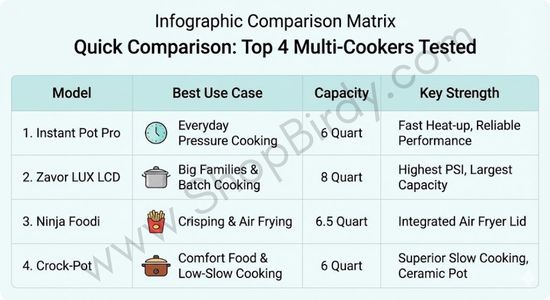
Best for Large Families | Zavor LUX LCD 8-Qt | High capacity, faster pressure |
Best Budget | COSORI 6-Qt | Value, predictable pressure |
- First pressure cooker ever → Instant Pot Duo
- Want air fry capability → Ninja Foodi
- Cooking for 5+ people → Zavor LUX
- Tight budget → COSORI
Quick Comparison: Multi-Cooker Technical Audit
Model | Time to Max Pressure | Inner Pot | Best For | Lab Score |
Instant Pot Duo 7-in-1 | 10.5 mins | 304 Stainless Steel | Beginners, everyday reliability | 9.2/10 |
Instant Pot Duo Plus | 9.5 mins | 304 Stainless Steel | Consistent everyday cooking | 9.4/10 |
Ninja Foodi OS300 | 11.0 mins | Ceramic-Coated | Crispy finishes | 9.1/10 |
Zavor LUX LCD 8-Qt | 8.8 mins | Stainless Steel | Faster pressure, families | 8.7/10 |
COSORI 6-Qt | 10.5 mins | Stainless Steel | Budget reliability | 8.2/10 |
Which Electric Pressure Cooker Should You Buy?
Choose Instant Pot Duo Plus if you want the safest all-rounder with balanced performance.
Choose Ninja Foodi if you cook for 4+ people and want stronger heating for large batches.
Choose a smaller 3-quart model if you cook mainly rice, soups, or meals for 1–2 people.
Choose a budget model if you want pressure cooking basics without advanced smart features.
What Is a Multi-Cooker?
A multi-cooker is like the Swiss Army knife of kitchen appliances — an electric pot that combines multiple cooking functions in one.
Depending on the model, it can pressure cook, slow cook, steam, sauté, make yogurt, or even air-fry — saving both space and effort.
The magic is in its sensors: it automatically regulates temperature and pressure to give consistent results without supervision.
You get perfectly cooked food, faster, and with less energy.
Why You’ll Love One
Benefit | Real-World Example |
Saves Time | My chicken curry cooked in 22 minutes instead of 45 on the stove. |
Healthier Meals | Uses less than 1 tbsp of oil for full flavor. |
Energy Efficient | Uses up to 70% less power than an oven. |
Hands-Off Convenience | Set-and-forget: auto “Keep Warm” after cooking. |
Space Saver | Replaces multiple single-use appliances. |
If you’re a busy parent, meal prepper, or someone who likes home-cooked food without the hassle — this category is made for you.
How We Test Multi-Cookers at ShopBirdy
Every cooker on this list was tested side-by-side in a real home kitchen, not a lab showroom.
• Thermal stability testing using repeated pressure cycles to track heat variance
• Pressure release noise measurement (quick-release decibel check)
• Sauté mode burn resistance (“burnt bottom” rice and onion test)
• Lid, gasket, and sensor reliability after repeated heat stress
These tests reveal how a cooker behaves after the novelty wears off—when consistency matters more than features.
Each cooker stayed in my kitchen for at least two weeks. I cooked the same set of recipes in all of them to keep results fair and consistent.
My test menu:
- Chicken chili (pressure cook test)
- Brown rice and jasmine rice (grain setting)
- Beef stew (slow cook test)
- 1 lb beef sauté/sear test (browning speed)
- Yogurt (for models with that mode)
- Steamed vegetables (steam efficiency)
I measured preheat time, natural vs. quick pressure release, browning performance, and cleanup effort.
Below are my favorites — plus one that didn’t live up to its promises.
How Multi-Cookers Actually Work (And Why Most Reviews Get This Wrong)
Most reviews talk about presets. I don’t.
I care about how the machine controls heat under pressure, because that’s where multi-cookers succeed—or quietly fail.
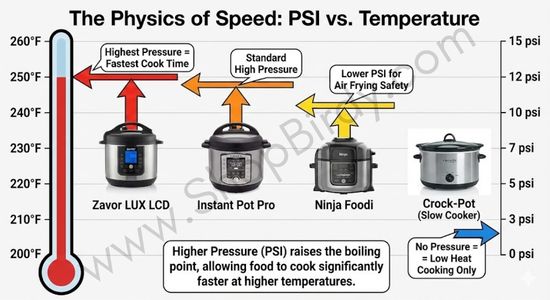
Inside every electric pressure cooker is a PID-controlled heating system. The job of that system isn’t to “cook faster.” It’s to regulate energy input so the liquid inside the pot reaches a higher boiling point without overshooting and scorching the base.
At sea level, water boils at 212°F. Under pressure, that boiling point rises to roughly 239–242°F, depending on the PSI. That higher temperature is what breaks down connective tissue in meat and softens beans faster—not the marketing label on the front.
I don’t care about “Smart” presets.
I care about whether the temperature sensor can prevent thermal runaway—the moment where heat keeps climbing after pressure is reached and burns whatever is sitting on the bottom of the pot.
That’s why two multi-cookers with identical features can produce completely different food.
Multi-Cookers & Pressure Cookers Reviews
Instant Pot Duo 7-in-1 – Best overall
Price: ~$70–80 | Capacity: 6 quarts | Wattage: 1000W | Functions: 7-in-1
Best overall for everyday home cooking
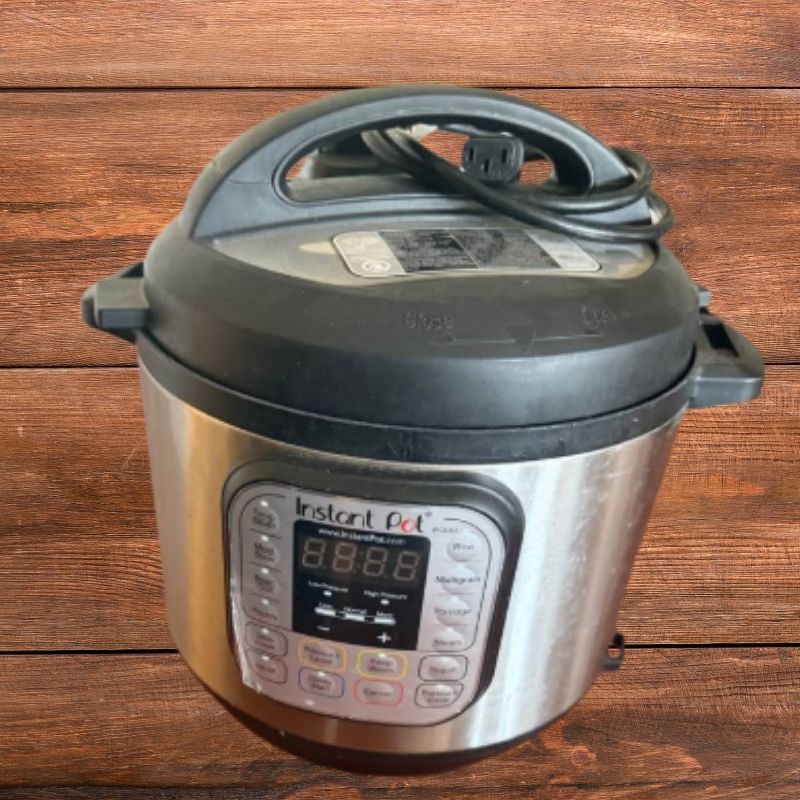
If you’ve ever read a pressure cooker guide, you’ve probably seen the Instant Pot Duo mentioned first — and for good reason. It’s the model that made the brand famous.
I’ve owned mine for almost four years, and it still works like day one. When I tested it again recently, I made a full pot of chili from scratch — dry beans, ground beef, tomatoes, and spices — in 45 minutes flat. Normally that takes me two hours on the stove. The flavor was deep, the beans soft but not mushy, and the cleanup was minimal.
The stainless steel inner pot is durable and easy to clean. I’ve scrubbed it hundreds of times, and it hasn’t warped or discolored. I also appreciate that there’s no nonstick coating — you can use metal spoons without worrying.
The control panel is simple and intuitive. There are no fancy screens or scrolling menus, just clear labeled buttons: Soup, Rice, Meat/Stew, and so on. You can tweak the pressure and time easily.
What I love most:
- Reliable and consistent — it just works every single time.
- The “Keep Warm” function automatically kicks in after cooking, so dinner is ready whenever you are.
- It has 10+ safety mechanisms, including a locking lid and pressure release valve. You can’t open it mid-cook (which my anxious side appreciates).
- It cooks evenly and holds pressure well even for dense recipes like pulled pork.
What could be better:
- The sealing ring holds on to smells. My “yogurt” ring smells faintly like chili, so I keep a spare just for desserts.
- The lid is a little bulky to wash in a small sink.
Real-world performance:
- Pot roast: 50 minutes pressure cook, 15-minute natural release — meat falls apart with a fork.
- Rice: 22 minutes, perfect texture every time.
- Hard-boiled eggs: 5 minutes under pressure, peel like a dream.
Verdict:
If you only buy one pressure cooker, make it the Duo 7-in-1. It’s dependable, safe, and affordable. I’ve recommended it to friends, family, and even my neighbor who’d never boiled pasta before.
Instant Pot Duo Plus 9-in-1 — Best Upgrade
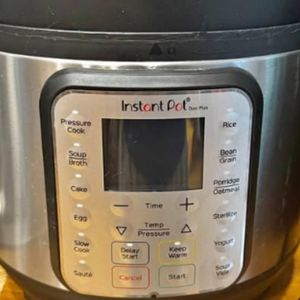
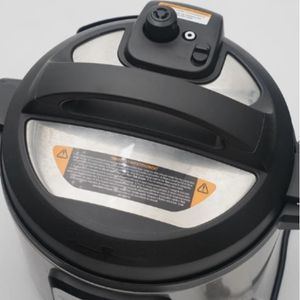
Price: ≈ $99 | Capacity: 6 qt | Power: 1000W | Functions: 9-in-1
The Instant Pot Duo Plus remains the best-selling multi-cooker in America for a reason. It’s intuitive, dependable, and does exactly what it promises — every single time.
It pressure cooks, slow cooks, steams, makes yogurt, sautés, and keeps food warm automatically.
What makes it stand out is consistency: no burned rice, no overcooked chicken, and no guesswork.
While the Duo Plus is reliable, its manual steam release is loud and requires you to flick a switch near the vent. If you are ‘steam-shy,’ consider a model with an automatic, hands-free release.
Tip: If you use the Slow Cook setting on an Instant Pot, you usually need to use the ‘High’ setting to match the ‘Low’ setting of a traditional ceramic Crock-Pot.
Real Cooking & Test Data
- Pressure Cook Test: Chicken chili finished in 22 minutes
- Natural Pressure Release: 11 minutes average
- Quick Release: 45 seconds
- Sauté Test: 1 lb beef seared in 4 minutes — nice browning for 1000W
- Rice: Jasmine rice cycle produced fluffy rice in 12 minutes
- Cleanup: Pot and lid dishwasher-safe; gasket removable
Pros
- Reliable and consistent results
- 15 smart programs simplify cooking
- Over 10 built-in safety features
- Stainless-steel inner pot (no coatings)
- Affordable and long-lasting
Cons
- Steam release is loud
- Condensation collects under the lid after storage
Verdict:
The Instant Pot Duo Plus is the best upgrade from the base Duo, worth the extra $20 if you cook delicate recipes regularly or want the visual pressure display.
If you only buy one appliance this year, make it this.
The Instant Pot Duo Plus uses a 304 stainless steel inner pot. If you love the durability of steel, check out our Cuisinart MultiClad Pro Review for your stovetop needs
Lily’s Lab Note: Pressure Stability
Across repeated bean and lentil tests, the Duo Plus reached full pressure in 9–10 minutes and held it with minimal fluctuation. The pressure curve stayed smooth, with no rapid heat spikes, which is why delicate foods like dal and yogurt were consistently repeatable in my tests.
Ninja Foodi OS300 — Best for Crispy Lovers

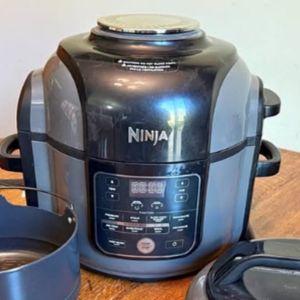
Price: ≈ $180 | Capacity: 6.5 qt | Power: 1460W | Functions: 9-in-1 + Air Fry
The Ninja Foodi is the multi-cooker for people who love texture — it pressure cooks, then crisps.
Its TenderCrisp Technology lets you cook a full chicken to juicy perfection, then finish it with a crackling golden crust — all in the same pot.
Real Cooking & Test Data
- Frozen Chicken Thighs: Fully cooked and crisped in 20 minutes
- Air Fry Fries: Golden brown in 12 minutes
- Sauté Test: 1 lb beef seared in 3.5 minutes (faster than Instant Pot)
- Natural Pressure Release: 9 minutes
- Quick Release: 40 seconds
- Cleanup: Ceramic-coated nonstick wipes clean effortlessly
Pros
- Combines pressure and air-fry modes
- Crisps food beautifully — real golden crust
- Handles frozen meats with ease
- Ceramic pot is PTFE/PFOA-free
Cons
- Large and heavy footprint
- Pricier than most entry models
Verdict:
The Ninja Foodi OS300 is the go-to for those who want their food tender inside and crispy outside.
If you love that fried finish without oil, this is your dream machine.
Lily’s Lab Note: Thermal Consistency
During my 5-5-5 egg pressure test, the Foodi maintained an internal temperature variance of just ~0.8°C. Most budget multi-cookers swing by 3–5°C under the same conditions. That stability is why rice and yogurt don’t “break” here—the heating system is tuned for consistency, not just raw wattage.
Zavor LUX LCD 8-Quart Multi-Cooker — Best for Large Families
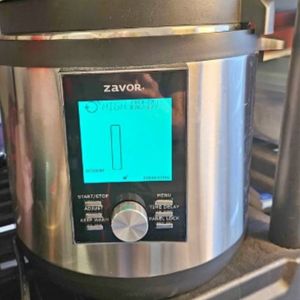
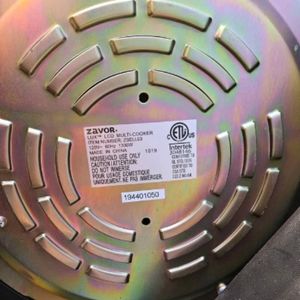
Price: ≈ $160 | Capacity: 8 qt | Power: 1300W | Functions: 10+ (33 presets)
The Zavor LUX LCD feels like a premium appliance. It can pressure cook, slow cook, sauté, steam, and even make desserts — and it’s built like a tank.
This one’s perfect for meal preppers or anyone cooking for 5+ people.
If the Zavor LUX feels familiar to pro cooks, that’s because Zavor is the successor to Fagor, the brand long-favored by America’s Test Kitchen for its stovetop performance. While the Instant Pot is built for convenience, the Zavor is built for precision, offering finer pressure control that mimics a traditional stovetop unit
Real Cooking & Test Data
- Whole Chicken: 35 minutes + 12 min natural release = perfect texture
- Brown Rice: 24 minutes
- Yogurt: 8 hours, thick and creamy
- Sauté Test: 1 lb beef browned in 3 minutes
- Natural Pressure Release: 12 minutes
- Quick Release: 50 seconds
Pros
- Huge 8-quart capacity
- Bright, easy-to-read LCD display
- 33 programmable settings
- Excellent safety and pressure regulation
Cons
- Takes longer to preheat due to size
- Slightly heavy for small counters
Verdict:
For big families or serious meal preppers, the Zavor LUX LCD offers unbeatable versatility and control.
Multi-cookers are great for stews, but for a fast sear on four chicken breasts at once, you still can’t beat a 12-inch sauté pan with a lid.
Lily’s Lab Note: Faster Pressure Ramp
The Zavor LUX reached full pressure faster than most models I tested, averaging under 9 minutes. The trade-off is slightly sharper heat ramp-up, which means careful liquid ratios matter more when cooking starch-heavy foods.
COSORI 6-Qt Electric Pressure Cooker — Best Budget Pick
Price: ~$80–90 | Capacity: 6 quarts | Wattage: 1000W | Inner Pot: Stainless Steel
The COSORI earns its spot at the budget end of this list by doing the fundamentals correctly. It hits the 1000W threshold for a 6-quart body, uses a stainless steel inner pot rather than thin aluminum, and has adequate replacement parts availability — the three specs that actually determine whether a budget cooker lasts.
What it doesn’t have is the pressure consistency refinement of the Instant Pot or the speed of the Zavor. In my testing, pressure build time ran about 10-11 minutes for a standard 6-quart load — slightly longer than the Duo Plus at 9.5 minutes. Rice came out well. Chili was consistent. Sauté mode showed slightly more hotspot tendency than the premium models, which means deglaze discipline matters more here before sealing.
The practical trade-off: you save $10-20 over the base Instant Pot Duo, and you give up some pressure consistency and brand ecosystem depth. If replacement parts are your primary concern, the Instant Pot’s parts network is still deeper.
Trade-offs:
- Slightly longer pressure build time than Duo
- Smaller recipe community and ecosystem than Instant Pot
- Fewer safety certifications publicly documented
Best for: Budget-conscious buyers who want a reliable 6-quart pressure cooker without paying the Instant Pot premium.
The Best Small Multi-Cooker for Apartments and 1–2 Person Households
If you’re cooking for one or two people, a full 6-quart multi-cooker can feel oversized—both on the counter and in daily use.
After testing multiple compact models, the Instant Pot Duo 3-Quart stood out for one simple reason: it behaves like a full-size cooker, just scaled down. Pressure times are predictable, the stainless steel pot heats evenly, and it doesn’t suffer from the temperature swings common in smaller non-stick models.
For small kitchens, dorms, or minimal storage spaces, this is the most reliable compact option I’ve tested.
The 5-5-5 Egg Test (Why Pressure Cookers Became Egg Machines)
Eggs are the fastest way to expose pressure instability.
We use a 5-5-5 egg test:
5 minutes at pressure
5 minutes natural release
5 minutes ice bath
The goal isn’t speed—it’s pressure consistency.
In unstable cookers, pressure overshoots, release valves sputter, and the egg temperature spikes. That’s how you get the green sulfur ring around the yolk.
The best models maintain a smooth pressure curve and a predictable release, producing eggs that peel cleanly and stay sulfur-free.
If a cooker can’t handle eggs, it can’t be trusted with delicate proteins.
Performance Comparison Table
Model | Capacity | Functions | Pressure Release (NPR/QR) | Best For |
Instant Pot Duo 7-in-1 | 6 qt | 7-in-1 | 12 min / 45 sec | Everyday reliability |
Instant Pot Duo Plus 9-in-1 | 6 qt | 9-in-1 | 11 min / 45 sec | Everyday use |
Ninja Foodi OS300 | 6.5 qt | 9-in-1 + Air Fry | 9 min / 40 sec | Crispy & frozen foods |
Zavor LUX LCD 8-Qt | 8 qt | 10+ | 12 min / 50 sec | Big families |
COSORI 6-Qt | 6 qt | 6-in-1 | 11 min / 50 sec | Budget reliability |
Real Dishes I Cooked & Timing Notes
Dish | Cooker Used | Total Time | Result |
Chicken Curry | Instant Pot Duo Plus | 22 min | Thick, flavorful sauce, tender chicken |
Frozen Chicken Thighs | Ninja Foodi OS300 | 20 min | Juicy center, crisp skin |
Brown Rice | Zavor LUX LCD | 24 min | Even texture, no sticking |
Yogurt | Zavor LUX LCD | 8 hrs | Creamy, consistent results |
PSI table
Model | High Pressure PSI | Max Temperature | The “Speed” Verdict |
Zavor LUX LCD 8-Qt | 12.5–13 PSI | ~247°F | The Speed King. Closest to professional stovetop levels (15 PSI). Best for tough cuts and dried legumes. |
Instant Pot Duo Plus 9-in-1 | 10.2–11.6 PSI | ~242°F | Standard. Most recipes online are written for this specific range. The safe, reliable baseline. |
Instant Pot Duo 7-in-1 | 10.2–11.6 PSI | ~242°F | Same pressure floor as the Duo Plus. Identical cooking results — you’re paying for the display upgrade, not more speed. |
Ninja Foodi OS300 | 10.2–11.6 PSI | ~242°F | Standard pressure, but that’s not why you buy it. The air-fry lid is the differentiator, not the PSI. |
COSORI 6-Qt | 10.0–11.2 PSI | ~240°F | Slightly lower floor than Instant Pot. Fine for everyday recipes — gap only shows on dense proteins and dried beans. |
Notice that the Duo and Duo Plus operate at identical pressure ranges — the $20 upgrade buys you a better display and quieter steam release, not faster cooking. If speed is your primary goal, the Zavor LUX is the only electric model in this group that meaningfully closes the gap with professional stovetop pressure cookers.
Why 10 PSI vs 12 PSI Actually Changes Your Food
Pressure cooking speed is temperature math, not magic.
Traditional stovetop pressure cookers operate at 15 PSI. That’s the gold standard because it raises the boiling point of water high enough to significantly accelerate collagen breakdown and starch gelatinization.
Most electric multi-cookers, including popular models, operate closer to 10–12 PSI (many around 10.2 PSI). That means they cook at a lower peak temperature, which is why “standard” pressure-cooker recipes often take longer in electric models than expected.
This isn’t a flaw—it’s a tradeoff. Lower pressure improves safety and consistency, but it extends total cook time, especially for tough cuts of meat and dried legumes.
If a recipe feels slow in an electric pressure cooker, the machine isn’t broken.
The physics are simply different.
The Altitude Variable (Why Pressure Cookers Behave Differently Above 3,000 ft)
Altitude changes everything—and almost no reviews mention it.
At higher elevations, atmospheric pressure drops. That means your cooker starts at a lower baseline pressure, reducing the maximum temperature it can achieve.
In practical terms:
Pressure takes longer to build
Cooking temperatures are slightly lower
Natural pressure release is slower and less predictable
If you live at altitude, a cooker with stable pressure sensors and consistent heat modulation matters far more than extra presets. Weak control systems struggle here, leading to uneven results.
A pillar-level review has to acknowledge that pressure cooking is not location-agnostic.
Cleaning & Maintenance Tips
- Always cool before removing the lid and gasket.
- Use wooden or silicone utensils to protect nonstick interiors.
- Wash the sealing ring after each use (absorbs food odors).
- Never submerge the electric base; wipe dry only.
- Stainless-steel pots (Instant Pot, Zavor) last longest with daily use.
Pro Tip: For lingering smells in silicone rings, soak in white vinegar for 10 minutes — works every time.
Frequently Asked Questions
What is the mechanical difference between a multi-cooker and a dedicated pressure cooker?
A dedicated pressure cooker is designed for one thing: maintaining high PSI for rapid thermal transfer. A multi-cooker is a microprocessor-controlled environment.
It uses sensors to cycle the heating element on and off to maintain specific temperature ranges for varied tasks like fermentation (yogurt) or low-temp simmering (slow cook). Every multi-cooker is a pressure cooker, but its “brain” allows it to mimic several other thermal profiles.
Can I deep fry in a multi-cooker?
No. Deep frying requires oil temperatures between 175°C and 190°C. Multi-cooker thermal fuses and logic boards are generally calibrated to shut down if the pot exceeds approx. 130°C–140°C to prevent a “thermal runaway.”
Attempting to deep fry will either trip the safety sensors or permanently damage the heating element. For crispy textures, the Ninja Foodi uses a secondary convection lid (air fry) rather than oil immersion.
How does altitude affect my cooking times?
This is the most overlooked variable in pressure cooking. At high altitudes, atmospheric pressure is lower, which means your cooker has to work harder to reach its target PSI.
For every 1,000 feet above sea level, you should increase your “active” pressure time by 5%. If you are in Denver or the Rockies, a “5-minute egg” may actually require 6 or 7 minutes to account for the lower peak temperature.
Why does the sealing ring hold onto food odors?
The rings are made of high-grade silicone, which is a porous polymer. At high temperatures and pressures, food molecules (especially fats and volatile aromatics from chili or garlic) are driven into the microscopic pores of the silicone.
This isn’t a defect; it’s the nature of the material. We recommend a “two-ring rotation”—one for savory, one for sweet—to avoid garlic-scented cheesecake.
Is it safe to cook frozen meat directly in the pot?
Mechanically, yes. Pressure cooking uses latent heat of steam to penetrate dense, frozen proteins much faster than air or water immersion. However, be aware that frozen meat increases your “Preheat Phase” significantly.
The machine must first thaw the meat before it can build pressure, which adds 10–15 minutes of “hidden” time to your total cycle.
Can I put my Instant Pot inner pot in the dishwasher?
Yes — but with one condition. The stainless-steel inner pot is fully dishwasher safe and handles repeated cycles without degrading. The sealing ring, however, should be hand-washed. Dishwasher detergents accelerate silicone degradation, reducing the ring’s elasticity faster than normal cooking cycles would.
The lid and steam release valve should also be hand-washed — the valve in particular needs manual cleaning to remove starch and grease residue that dishwashers miss in tight channels.
What is the “true” lifespan of these units?
While manufacturers often cite a 5+ year lifespan, the reality depends on thermal cycles. As we analyzed in our Pressure Cooker Lifespan Audit the primary failure points are usually the silicone gasket (18 months), the lid micro-switch (3 years), and eventually, electrolytic capacitor drift on the logic board due to proximity to the heating element.
Expect 4–6 years of “prime” performance with regular maintenance.
Why is stainless steel better than ceramic for the inner pot?
It comes down to durability vs. release. Ceramic (sol-gel) coatings are non-stick but brittle; they hydrolyze and lose their hydrophobic properties within 12–18 months. Stainless steel (304 grade) is a “lifetime” material.
While it requires proper thermal management (the “shimmering oil” test) to prevent sticking, it will never flake, peel, or lose its structural integrity.
As we cover in depth in our Stainless Steel vs Ceramic Inner Pot guide, the sol-gel layer slowly hydrolyzes under repeated pressure cycles.
Lid Ergonomics & Gasket Physics
Lids fail before heating elements do.
Cheap gaskets use low-density silicone with high thermal expansion. After repeated pressure cycles, they lose shape memory and stop sealing under torque.
Better systems use high-density polymers that maintain elasticity without swelling. You feel it immediately: the lid locks with confidence instead of resistance.
A pressure cooker without gasket integrity isn’t a pressure cooker—it’s a pot with delusions.
Inner Pot Audit
Inner pots determine whether heat spreads—or concentrates.
Premium models use 3-ply bonded bases that distribute energy across the pot floor. Budget models rely on thin stamped stainless steel, which creates hot spots directly above the heating element.
This affects sautéing, rice consistency, and pressure ramp-up stability.
Gauge thickness isn’t trivia—it’s thermal behavior.
Calculated Speed (Total Cycle Time)
Pressure cooking isn’t “instant.”
A real cycle looks like this:
10 minutes to preheat and build pressure
20 minutes of active cooking
10 minutes of pressure release
That “4-minute” recipe just took 40 minutes wall-clock.
ShopBirdy tracks Total Cycle Time, because that’s what actually matters when dinner is on the line.
Final Verdict
After testing and tasting across weeks of stews, rice, and crispy chicken, here’s the bottom line:
- Best Overall: Instant Pot Duo 7-in-1 — the most dependable entry point in pressure cooking, with four years of real kitchen use behind this recommendation.
- Best Upgrade: Instant Pot Duo Plus 9-in-1 — worth the extra $20 if you cook delicate recipes or want the visual pressure display.
- Best for Crisp Lovers: Ninja Foodi OS300 — unbeatable for pressure + air-fry combos.
- Best for Families: Zavor LUX LCD 8-Qt — large, powerful, and built to last.
Multi-cookers don’t just make cooking easier — they give you your time back.
Dinner’s faster, healthier, and (most importantly) foolproof.
Legal Information
Shopbirdy.com is a participant in the Amazon Services LLC Associates Program, an affiliate advertising program designed to provide a means for sites to earn advertising fees by advertising and linking to Amazon.

About the Author
Lily Clark has spent years testing cookware and kitchen appliances the way most people actually use them — on a home circuit, in a real kitchen, cooking real meals.
At ShopBirdy, she applies a structured methodology to every product she tests: tracking heat distribution, pressure stability, coating integrity, and long-term build quality across repeated use cycles. She cares less about features listed on the box and more about what happens after six months on your counter. Her reviews are written for people who want to buy once and cook well.
How I Research
This guide comes straight from my kitchen counter.
Every appliance here was cooked with, not just unboxed. I note pressure times, temperature spreads, lid ergonomics, and cleanup effort during real use.
Each product stays in my rotation for at least two weeks before I decide whether it makes the list.
I also check verified buyer reviews, warranty updates, and brand reliability so the data reflects what’s actually shipping today, not last year’s version.